Choose a starting product, then describe the change
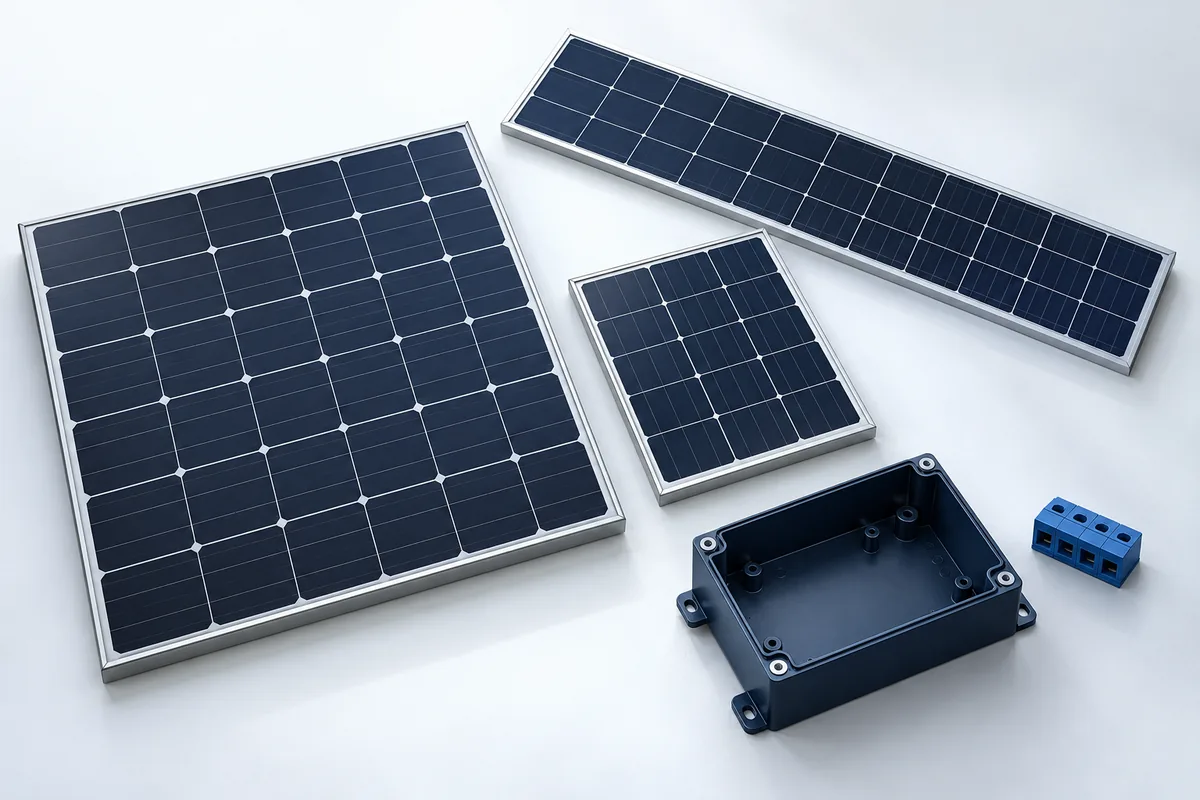
The most useful starting point may be a standard module, a different form factor or a regulated portable charger. They create different integration work.
| Starting point | What the catalogue establishes | What the project must resolve |
|---|---|---|
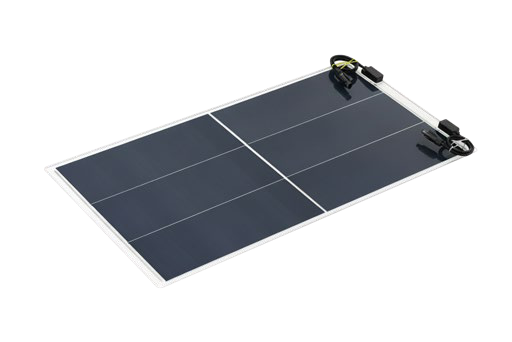
| 240 W lightweight module | A listed module envelope and electrical figures | Supported mounting, handling and the receiving controller |
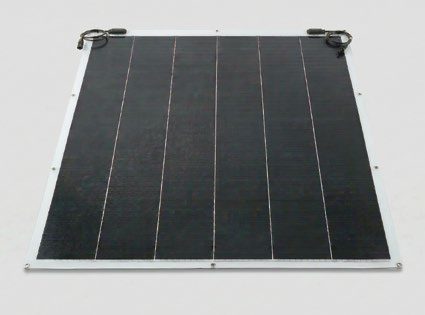
| 100 W lightweight module | A different listed envelope and voltage | Whether its form and interface fit the host |
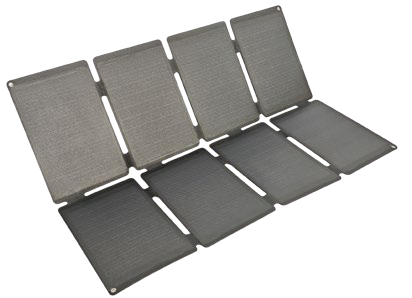
| 60 W folding charger | Array and port ratings for a stated configuration | The selected port, device requirements and use arrangement |
The folding charger’s USB-C output cannot be evaluated as though it were an unrestricted raw photovoltaic module. The port-output guide explains that distinction, using USB-IF’s general Power Delivery context rather than inferring extra product capability.
Use a change-request sheet
| Requirement or requested change | Include in the brief | Evidence needed before agreement |
|---|---|---|
| Size and mounting | Usable envelope, supports, obstructions and mass limit | Applicable drawing and permitted mounting/handling conditions |
| Cable or connector | Exit direction, clearance and receiving interface | Electrical details, connector definition and proposed drawing |
| Power/charging task | Device duty cycle, battery/controller and operating conditions | Interface review and an agreed evaluation configuration |
| Branding or packaging | Intended use and scope | Feasibility and commercial confirmation for the selected item |
Leave an undecided item labelled undecided. For example, an unselected battery architecture is an electrical design input to resolve, not a reason to assume a catalogue pairing will work.
What the first review should produce
Agree on a candidate configuration, the drawings/documents needed and a list of unresolved decisions with owners. If a sample is appropriate, specify what it should establish: mechanical fit, a particular charging interface or another defined question.
Use the solar selection gates before adding a component to a shortlist. Keep real operating inputs separate from any illustrative calculations. Do not infer daily energy, permitted bending or a production-ready installation from rated watts and thickness.
Move from a brief to a scoped evaluation
Send the device purpose, destination market, usable area, electrical interfaces, sample quantity and project milestone. We can organize the options and coordinate the model-specific questions. Customization, tooling, costs and timing are settled only for an agreed scope.
The result is a reviewable component and change request—not an implied complete compatible kit. Bring an existing brief or use the OEM template to prepare one.
Sources & review scope
This is a component-selection and customization-scoping framework. The linked product figures are manufacturer-stated; no tooling capability, minimum quantity, sample timing or complete power system is promised.